What this guide is for
Barbecue technique is fire management, equipment behavior, food safety, production timing, and staff judgment operating at the same time. A technique that works in one pit can fail in another because airflow, fuel, weather, load, grease, and cooker geometry are different.
The goal is repeatable control: the pit team should be able to explain what it is watching, what action it will take, what would make it stop the cook, and what will be recorded for the next shift.
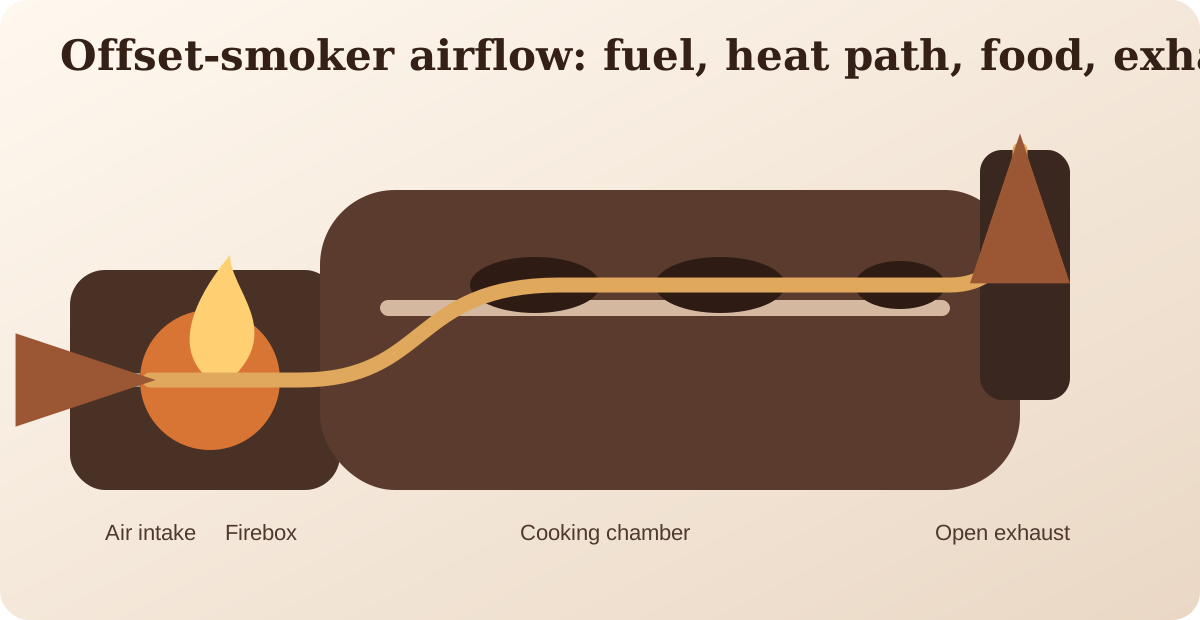
Offset Smoker Operation means an offset smoker separates the firebox from the cooking chamber. Heat and combustion products move through the cooker and exit the stack, but temperature and flow vary by fire size, pit geometry, leaks, weather, food load, and grease.
The operator has to manage a live fire and an uneven piece of equipment at the same time. A lid thermometer cannot reveal every hot zone, and opening the cook chamber changes the system.
Build the operating standard
Inspect doors, seals, grates, thermometers, grease paths, and exhaust. This should be written into the venue’s procedure with a named role, a time or trigger, the equipment or information required, and the action to take when the standard cannot be met. The manager should be able to observe the task during service rather than relying on a closing signature.
Build a coal bed before loading food. This should be written into the venue’s procedure with a named role, a time or trigger, the equipment or information required, and the action to take when the standard cannot be met. The manager should be able to observe the task during service rather than relying on a closing signature.
Use split sizes appropriate to the firebox and add fuel in controlled increments. This should be written into the venue’s procedure with a named role, a time or trigger, the equipment or information required, and the action to take when the standard cannot be met. The manager should be able to observe the task during service rather than relying on a closing signature.
Monitor temperature near the cooking surface. This should be written into the venue’s procedure with a named role, a time or trigger, the equipment or information required, and the action to take when the standard cannot be met. The manager should be able to observe the task during service rather than relying on a closing signature.
Rotate food only when pit design or loading requires it. This should be written into the venue’s procedure with a named role, a time or trigger, the equipment or information required, and the action to take when the standard cannot be met. The manager should be able to observe the task during service rather than relying on a closing signature.
Document the setup so trained staff can repeat it. This should be written into the venue’s procedure with a named role, a time or trigger, the equipment or information required, and the action to take when the standard cannot be met. The manager should be able to observe the task during service rather than relying on a closing signature.
Manager control points
Define the decision authority before the shift. Employees need to know who can approve a substitution, stop production, discard food, close a station, call a vendor, contact the regulatory authority, or delay service.
Use measurable checkpoints. A checklist becomes useful when it names a product, station, time, temperature, quantity, condition, document, or observable behavior. “Check the kitchen” is not a control point; “verify the walk-in display and two product temperatures before prep” is.
Plan the corrective action at the same time as the standard. The venue should not discover during a rush that nobody knows what to do with a failed reading, damaged package, missed check, unsafe fire, absent employee, or unavailable ingredient.
Common failure patterns
- Loading food before a stable fire and coal bed.
- Using the stack damper as the main heat control.
- Ignoring grate-level temperature differences.
- Opening the chamber repeatedly.
- Operating with grease accumulation, damaged doors, or blocked drainage.
Records that make the system real
Records should be completed at the time of the work, kept for the period required by law, policy, insurer, or professional advice, and reviewed for patterns. A perfect stack of forms is not evidence of control when every value is identical or entered at closing.
Do not collect unnecessary private, medical, payment, or identification information. Limit access to incident, employee-health, and customer records.
| Record | Minimum useful content |
|---|---|
| Startup and load time | Who, what, when, result, and corrective action where applicable. |
| Grate-level temperatures | Who, what, when, result, and corrective action where applicable. |
| Fuel additions | Who, what, when, result, and corrective action where applicable. |
| Rotations or wraps | Who, what, when, result, and corrective action where applicable. |
| Weather | Who, what, when, result, and corrective action where applicable. |
| Finish/hold time and quality notes | Who, what, when, result, and corrective action where applicable. |
Questions to answer before using this page
- Which Texas or local authority controls this address and process?
- Which exact employee owns the task on opening, peak, shift change, and closing?
- What equipment, space, supplier, or training does the standard require?
- What reading, observation, or document proves the task was completed?
- What condition requires food disposal, station shutdown, service refusal, or professional escalation?
- How will the next manager learn what changed?
Sources and further verification
These sources support the historical or operational context. Verify the current page, effective date, and controlling local authority before applying regulatory material.
- EPA Best Wood-Burning Practices — Dry wood, hot fires, smoke reduction, and materials not to burn; the Burn Wise program pages are retained as a historical record.
- EPA Energy Efficiency and Wood Moisture — How moisture affects smoke and combustion efficiency.
- NIST Glossary: Smoke — Technical definition of smoke from pyrolysis and combustion.
- US Forest Service: Thermal Properties and Combustion of Wood — Technical background on wood, heat, combustion, and charring.
- OSHA Restaurant Cooking Safety — Burn, hot oil, cooking-equipment, and fire hazards.
- OSHA Food-Service Fire Safety — Grease, ducts, housekeeping, equipment, and fire risks.